
People ask me for a clean suspense novel the way they ask for a good doctor, which is to say they want a name they can trust and no surprises in the diagnosis. I spent thirty-one years putting books into the hands of teenagers at a Christian school library, and I have spent the four years since retirement doing the same for the women in my church book group. So when a cover promises an FBI case and a faith-friendly story, I read with two questions. Is the case honest? Is the faith honest? Lynette Eason's Too Close to Home is the first book in the Women of Justice series, and it is the one I handed to the group in September 2024. I have read this one once, in August 2024, and I have not read the other three in the series. That matters, and I will say why.
The edition I own is the Revell paperback, 336 pages, 5.5 by 8.5 inches. The Amazon listing gives it 4.4 stars from nearly 7,000 ratings. I do not put much stock in a star average by itself, because a hundred people can love a book for a hundred different reasons, and one reader's clean is another reader's too much. What I can tell you is how it read in my green armchair by the front window, what I wrote on the page I keep for each book, and who I would hand it to. I can also tell you who should leave it on the shelf. That is the honest review nobody puts on a back cover.
The Quick Verdict
A steady, clean procedural with a case that will sit heavy with any reader who loves a teenager, and a first book that leaves the wider series open.
Amazon Check Today's Price →If you can carry the premise, this is a sure-handed place to start
Eason keeps the investigation at the center and lets the faith sit alongside it, not on top of it. For a reader who wants a clean case without a lecture, start with book one.
Amazon See it on Amazon →How I've Used It
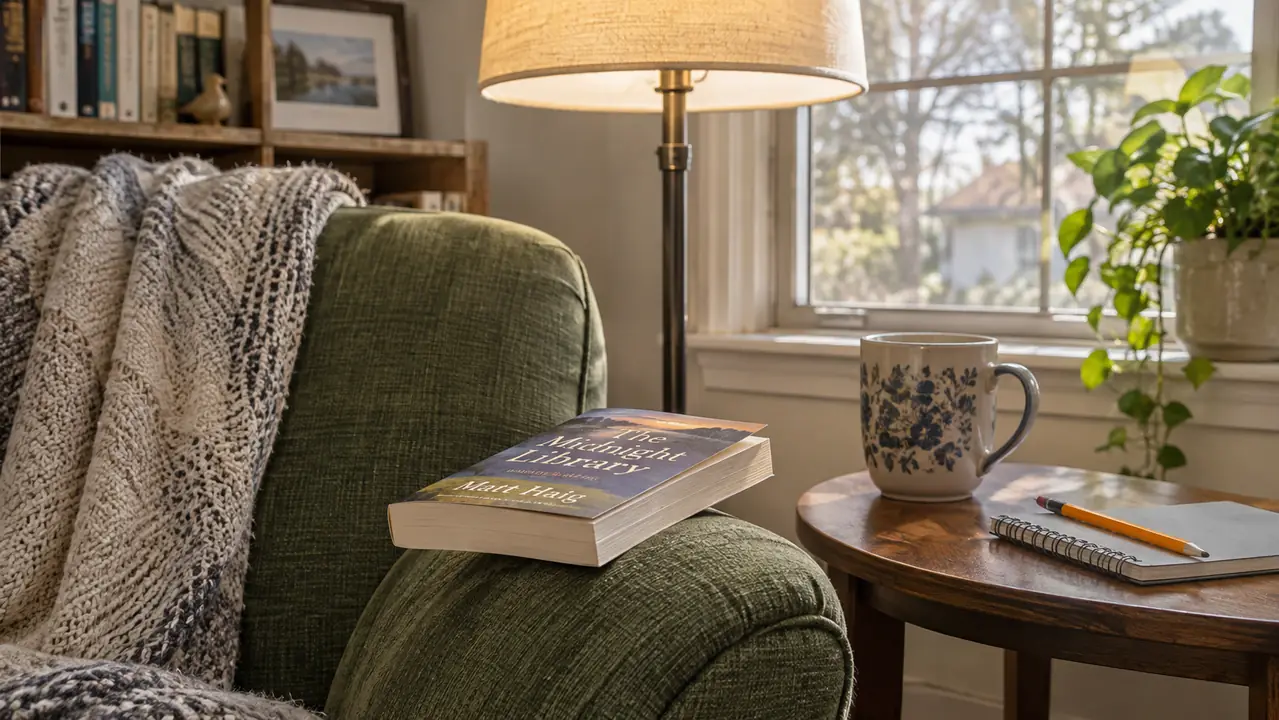
I read Too Close to Home in August 2024, over about ten evenings, which is my usual pace. I keep a pencil and a small notebook on the side table, and for each book I write down the day I start, the day I finish, and the person I would hand it to first. On this page I wrote a name I will not print here, because the person has not read it yet and I do not lend a book I have not finished. I finished on a Thursday. The next Tuesday I put it in my bag for the church fellowship room.
Our group is eight women, and we meet on the second Tuesday of each month. I picked this one for September 2024. Dottie, who is seventy-four and my longest reading friend, made her usual early guess before we were halfway through the coffee. I will not tell you whether she was right, because that is not my business to tell. What I will tell you is that the meeting ran twenty minutes over, the longest we have gone in a year of reading together. A book that keeps eight women talking past the usual stopping time has done something.
I have used the book since then the way I use most of my paperbacks. It sits on the hall bookcase, and when someone asks for a suspense novel with an FBI agent and a detective, I take it down and tell them what I am about to tell you. I have not read the rest of the series. I am not going to pretend otherwise, and I am not going to review books two through four from a catalog description. This is a review of book one, by a reader who read book one.

The Part Nobody Puts on the Back Cover
Here is the part a cover blurb will soften. The case involves missing teens turning up dead. That is the engine of the story, and Eason does not use it as a decoration. I am a parent, and I found those first chapters heavier than the cover prepared me for. The book stays clean in language and in what it shows, which I appreciate, but clean is not the same as light. A reader who wants a mystery to be a cozy puzzle should know that this one carries a real weight.
I do not say that to scare anyone off. I say it because I have watched a reader buy a book on a cover and come back to me feeling ambushed. The listing is not hiding the premise, but a listing is a short thing and a reader's imagination fills the gaps. If you have lost a child, or if you work with teenagers, or if the evening news already gives you enough of this, you may want to pass. That is not a failure of the book. It is a fact about the reader, and a book can be good and still be wrong for a particular week.
The other thing nobody puts on the back cover is the series math. This is book one of four. I have read only this one, so I cannot tell you how the larger arc lands. I can tell you that it reads as a first book, with a case that has its own shape and a wider world that is clearly being set up. If you are the sort of reader who needs every thread tied in one sitting, plan to read on. If you are the sort who likes to meet a character and then decide, this is a fair place to begin.
I will also say plainly that this is not a cozy. There is no bakery and no amateur sleuth who solves the case between scones. It is a police procedural with an FBI agent and a detective, and it asks you to follow the work. If that is what you want, good. If you want a small town puzzle with a cup of tea beside it, look elsewhere and do not blame the book for being what it is.
What Eason Does Well
Eason writes a procedural with a steady hand. Samantha Cash and Connor Wolfe are the two names the listing gives, and the book gives them work to do. I never had to flip back to remember who was speaking. The investigation moves, the chapters are short enough for a bedtime reader, and the romance runs alongside the case instead of swallowing it. For a reader who has been burned by suspense novels that turn into a romance at the halfway mark, that balance is a relief.
The faith is handled the way I prefer. It is present, it is not a sermon, and it does not ask the reader to sign anything. I am a lifelong Baptist and I do not need a novel to preach at me. I need it to be honest about the people in it. Eason's people pray when prayer fits and do not when it would be false. That sounds like a small thing. In this genre it is not.
I also noticed the physical book, which is not a compliment a reviewer usually gives. The Revell paperback is 336 pages and fits in my hands without a fight. At 5.5 by 8.5 inches it is a trade paperback, not a mass-market brick. I read it in the green chair with the floor lamp over my shoulder and the notebook on the side table. A book that is easy to hold gets read more, and this one was easy to hold.
That September meeting ran twenty minutes past our usual stop, the longest we had gone in a year. A book that keeps eight women talking has done something.
Where the Book Pushed Back on Me
I had two honest complaints, and I will give them plainly. The first is the premise. Missing teens turning up dead is a hard river to swim, and Eason asks the reader to swim it. I do not think the book is gratuitous, but I do think a reader should know before page one. The second is the middle. There were stretches where the investigation settled into interviews and paperwork, and my attention drifted to the lamp. I kept reading because I trusted the hand, and I was not sorry. But I will not pretend every chapter pulled me.
The romance is another place where a reader's taste will decide. It is there, it is clean, and it does not take over. If you want a case with no romantic thread at all, you will notice it. If you like a little warmth alongside the work, you will be glad of it. I am in the second camp, mostly. I did not need it, and I did not mind it. That is as fair as I can be.
I also want to say a word about the ending, without saying a word about the ending. I will not tell you who did it, who lives, who dies, or how the romance lands. I will tell you that I closed the book satisfied and did not feel cheated. A clean suspense novel can still cheat a reader with a solution that comes from nowhere. This one did not. That is all I will say.
There is one more small thing, and it is about expectations rather than the book. The title and the cover suggest a case that comes close to home for the characters, and the book delivers that. If you picked it up hoping for a straight chase from page one, you may find the opening slower than the cover implies. I did. I adjusted. By the time the case took hold I was glad for the groundwork, but I would not call the opening pages a sprint.
The Faith Question, Asked Plainly
People ask me whether a Christian novel is preachy, and I have learned to ask them what they mean. Some mean a book where the characters stop to explain the plan of salvation. Some mean a book where the good people are too good and the bad people are cartoons. Some mean a book where faith is a sticker on a story that would work without it. Too Close to Home is not the first kind. It is not the second. The third is a matter of taste.
What I can say is that Eason writes faith as part of the air the characters breathe, not as a lesson inserted between chapters. I never felt I was being handed a tract. I also never felt the faith was a costume. For a reader who wants a clean story that does not pretend the characters live in a world without God, this is the sort of book that fits. For a reader who wants no faith content at all, this is not that book, and no amount of clean language will change it.
I will not tell you a novel fixed anything for me. I am sixty-six years old, I have been reading since I was a girl, and I have never once had a mystery novel settle a question of faith. What I can tell you is that this one did not insult the faith it carries. That is a lower bar than some readers want, and a higher one than some books clear.
I also will not tell you that the book is safe for every teenager in your church. It is clean in language and in what it shows, but the subject is still the death of young people. A parent should read it first and decide. I say that as a retired school librarian who spent thirty-one years making exactly those decisions. A label on a spine is not a substitute for a parent's judgment.

How the Group Took It
Our group is not a panel of critics. We are eight women who read one book a month in the fellowship room, and we have very different tolerances. Dottie guesses the culprit early and enjoys being right. Another woman reads the last page first, which I have stopped arguing about. A third will not finish a book with a child in danger. I picked this one knowing that third woman might sit it out. She came, she listened, she said she was glad she had not read it. That is not a failure. That is a book finding its reader and losing another.
The conversation ran long because the book gives you something to argue about. Not the culprit, which I will not discuss here, but the choices the characters make and whether the case is handled the way real work is handled. I am not a detective and I do not play one in the fellowship room. I can only tell you that the women who like a procedural liked this one, and the women who want a romance with a little mystery around it found enough to keep them.
The Series Question
Too Close to Home is book one of four. I have read only this one, and I will not pretend to know how the other three go. What I can tell you is that this book does not leave you hanging off a cliff in the crude sense. It gives you a case and it gives you an ending. It also leaves a wider world open, which is what a first book in a series is supposed to do. If you are a reader who must have the whole set before you start, the set exists. If you are a reader who wants to try one, this is a fair trial.
I have not bought the other three. That is not a verdict. It is a fact about a woman with a hall bookcase and a stack of paperbacks waiting. I may get to them. I may not. The book stands on its own well enough that I do not feel cheated by stopping here, and that is more than I can say for some first books I have read.
What I Liked
- Samantha Cash and Connor Wolfe carry the case without blurring together.
- The faith is woven in, not preached.
- The romance stays alongside the investigation.
- The Revell paperback is easy to hold at 336 pages.
Where It Falls Short
- The missing-teen premise is heavy from the first chapters.
- The middle settles into procedure and slows for some readers.
- It is book one of four, so the wider story is not finished here.
Who This Is For
This is for the reader who wants a clean suspense novel with an FBI agent and a detective working a case together, and who does not mind a little romance in the margins. It is for the reader who wants faith present but not preached. It is for the woman who has read every cozy mystery in the church library and wants something with more weight. It is for a reader who can carry a story about missing teens without it following her to bed.
Who Should Skip It
Skip it if the death of teenagers is a line you do not cross in fiction, even when the book stays clean. Skip it if you want a case with no romantic thread at all. Skip it if you need every thread tied in one volume and will not read on. Skip it if you want a book that argues with the faith rather than rests in it. None of those is a flaw in the reader. They are simply different shelves.
For the reader who wants the case and the faith handled with a steady hand
If the premise is one you can carry, Too Close to Home is a clean, well-paced place to meet Eason's Women of Justice series. Start with book one and decide for yourself.
Amazon See it on Amazon →