
Two clean suspense novels, two women in law enforcement, and the same question I get in the church hallway most months: which one do I hand over first? The two books are Too Close to Home, the first of Lynette Eason's Women of Justice novels from Revell, and Covert Justice, the one by Lynn H. Blackburn. I read the Eason book in August 2024 and put it in front of our book group that September. I read the Blackburn on my own, years before, in one quiet week, and I have never put it to the group at all. Both are clean. Both are suspense. But they are not the same evening, and that is the whole of the comparison.
So here is the short answer. If you want a case that runs the length of a book, with an FBI agent and a detective working it side by side, take Too Close to Home. If you want something lighter to carry to bed, a story that opens and closes in a sitting or two, take Covert Justice. For some of you that is enough and you can stop reading here. The rest of this is for the reader who wants to know what she is getting before she gives up an evening to it.
| Too Close to Home | Covert Justice | |
|---|---|---|
| Length | 336 pages. About a week of my evenings. | Shorter. I finished it inside a week without trying. |
| Series | Listed as book 1 of 4 in Women of Justice | Nothing to keep track of afterward |
| The case | An FBI agent and a detective working it side by side | One thread, and it moves quickly |
| Romance | Runs alongside the case rather than instead of it | Also there, as I remember it |
| Subject matter | Missing teens turning up dead. Heavy going. | Lighter going. I could read it at bedtime. |
| Faith on the page | Clean, worn lightly, no sermon in the middle of it | Clean as well |
| Tested on a group | Our eight women read it. We ran twenty minutes over. | Never put to the group |
| Where it lives now | The hall bookcase, with the ones I keep | Handed to a friend and not returned |
Where Too Close to Home Wins
What Eason gives you that a shorter book cannot is room. Samantha Cash and Connor Wolfe have a case to work, and the novel lets you watch them work it rather than hear about it afterward. I have read only this first of the four Women of Justice books, and I will say so plainly, because I would rather tell you what I actually know than pretend to a shelf I have not read. It stood on its own well enough that I never felt I had walked into a room mid-conversation. That is not a small thing in a first book, and it is not always true of the ones that follow.
Our group took it up in September of 2024, eight of us around the table in the fellowship room, second Tuesday as always. That meeting ran twenty minutes over, which for us is practically a shouting match. Dottie, who is seventy-four and has been my reading friend longer than anyone at that table, guessed the culprit before the supper dishes were cleared, as she always does, and she was wrong, which is half the entertainment. Nobody asked me to pick something lighter the following month. That is the closest thing to a standing ovation our group ever gives.

Where Covert Justice Wins
Covert Justice wins on the carry. I read it years ago, before I kept a careful page in the notebook for everything, and I finished it inside a week without once moving my bookmark to the other chair. As I remember it, the book is shorter, the case is tighter, and it is over before you have quite settled into the town. There is a real use for a book like that. Some seasons you want to finish something, not adopt a series and four volumes of commitment.
It also wins on weight, and this is the part I would want somebody to tell me. I did not lie awake after Covert Justice. I did lie awake once after Too Close to Home, and not because it was badly done. The subject is missing teenagers, and a woman of sixty-six reads that differently than she did at forty. That is not a fault in the book. It is a fact about the reader, and you are the reader, so you should know it before you begin.
I did lie awake once after Too Close to Home, and not because it was badly done.
How I Read Both
My habit is plain. Paperback, pencil, a small notebook on the side table, one page for each book: the day I started, the day I finished, and the name of the person I would hand it to. Too Close to Home got a full page and a name in the margin. Covert Justice got half a page, because I read it before I was as careful about the notebook as I am now. The Eason still sits on the hall bookcase today. The Blackburn I passed on after one read, which is what I do with most of them.
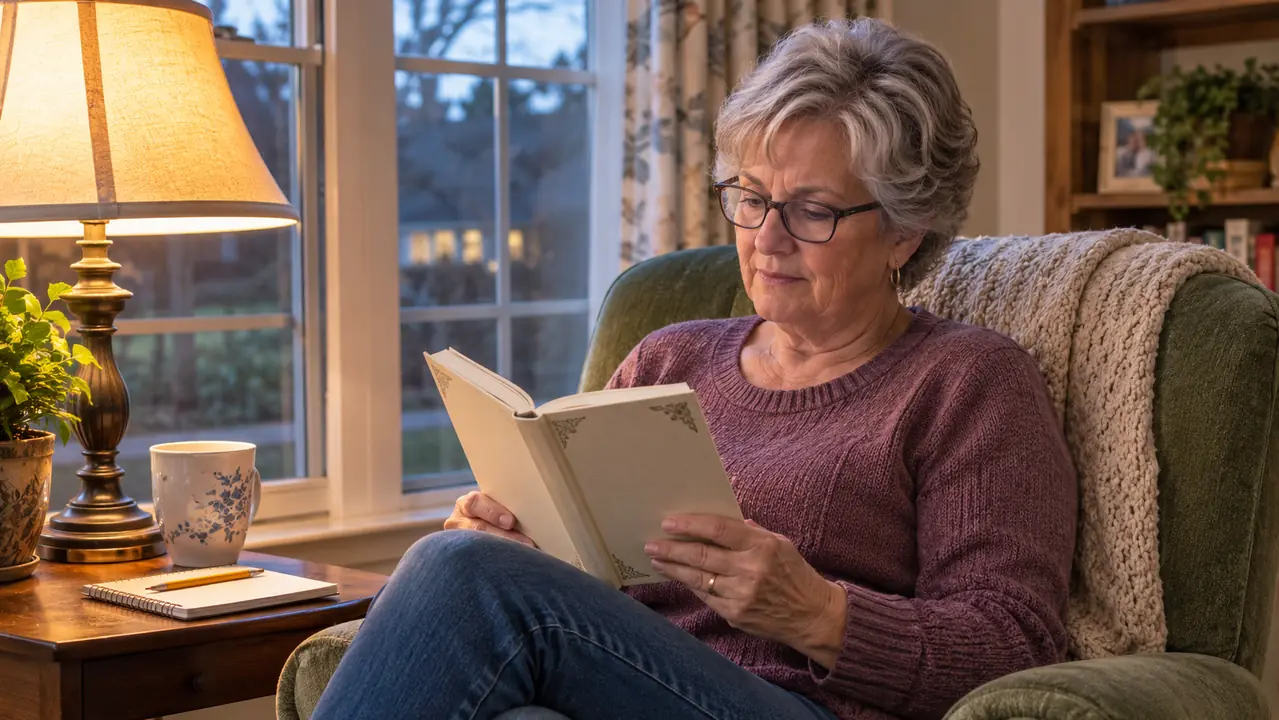
Glenn does not read novels. He sits in the other chair with the paper and lets me alone with mine, which is a kindness, and the floor lamp between us does the work. I get through about one novel every ten days, mostly in the evening after supper and on a Sunday afternoon, so 336 pages is a week and a bit for me. That is the honest arithmetic behind everything I say about length. When I call a book long, I mean it cost me a week of my own evenings.
I never put Covert Justice to the group, and I want to be clear that this was no judgment on it. Our table likes a book with enough room in it for eight women to disagree, and the shorter suspense novels tend to close the argument before we have finished the coffee. I read it as an evening's pleasure and handed it to a friend, and it has not come back. If you are in a group, that is worth knowing too. Some books are for the table. Some are for the chair.
What I Look For Before I Buy
Three things, after thirty-one years of shelving books in a school library. First, the case has to be worth following on its own, before any romance gets in the way of it. Second, the people have to have jobs and do them, which sounds small until you read a book where the detective only ever reacts to what somebody else has done. Third, the faith has to be in the walk and not in the mouth. I have put down books that stopped dead so a character could explain her salvation to a stranger in a parking lot. I am not against the conversation. I am against it arriving in the middle of a foot chase.
By those three tests, Too Close to Home does well. The case holds, the two leads are working it as professionals, and the belief is worn lightly enough that you could hand the book to a neighbor who does not go to church and she would not feel preached at. Covert Justice passes the same three tests in a smaller frame. Neither one is what I would call a devotional. They are novels first, which is what I want from the label on the spine.

What the Listing Tells You
The listing for Too Close to Home is straightforward, and I like a listing that does not oversell. Revell, 336 pages, the repackaged edition dated November 17, 2020, in English, at 5.5 by 8.5 inches, which is the trim that fits a tote bag and not a coat pocket. It is listed as book one of four in the Women of Justice series, so you will not be guessing where to start. I have read only this one, and I have said so twice now, which ought to tell you something about how I feel about reviewers who pretend otherwise.
As I write this the book carries 4.4 stars from close to seven thousand ratings, which is a good many readers and a respectable average. I would not buy a book on that number alone. A rating tells you whether people finished it and were satisfied. It does not tell you whether the subject will sit well with you at eleven at night, and that is the question this particular book raises. Read the number as a sign that it delivers what it promises, not as a sign that it is right for your house.
The Subject Matter, Plainly
The case in Too Close to Home involves missing teenagers turning up dead. I will not go further than that, because there is no need and I do not spoil books. But you should weigh it before you start. If you read to get away from the news for an hour, this is not the escape. If you are a parent or a grandparent, some of it will cost you. That is not a reason to skip it and it is not a reason to be afraid of it. It is a reason to know what you are picking up on a Tuesday night.
What I can tell you is that it stays clean. There is nothing graphic on the page, no language I would have blushed at in a school library, and the faith is carried the way I like it, in how the people behave rather than in a speech dropped into the middle of a chase. Eason does not stop the story to preach at you, and after all those years of putting books into young hands, that is the thing I notice first and the thing I am least willing to forgive when it goes wrong.
If You Want the Case With Room to Work It
Too Close to Home is book one of four, 336 pages from Revell, and it is the one our group still argues about. Clean, faith-friendly, and it never stops the story to preach at you.
Amazon Check today's price on Amazon →Who Should Buy Which
Take Too Close to Home if you want an FBI agent and a detective working a case side by side, with a romance running alongside the case rather than instead of it. Take it if you like a series and do not mind committing to a first of four. Take it if you can carry the subject, or if you would rather be moved than soothed for a week. I would put it in the hands of the reader who says she has read everything and wants something with a bit of spine to it.
Take Covert Justice if you want a shorter evening, a lighter load, and a story finished before the week is out. Take it if the subject of the other one is too close to home this season, or if you are buying for a reader who puts a book down the moment it turns dark. I am not sending you anywhere to buy that one. I am only telling you that both are worth the evening, that they are not interchangeable, and that the difference between them is weight, not quality.
One last thing and I will leave you to it. I keep five novels on the hall bookcase and I have given away a good many more than that. The ones that stay are the ones I would hand to a friend without a warning attached. Too Close to Home is on that shelf. Covert Justice went to a friend and stayed gone. That is not a verdict on either book. It is only what happened in my house.
One Book to Try First, and You Can Decide the Rest
Start with the Eason. If the subject matter is too close to home this season, the Blackburn is the lighter evening, and I will not pretend otherwise. Neither one will preach at you.
Amazon See Too Close to Home on Amazon →