

It is November 2026, and Without a Trace by Colleen Coble has been sitting on my hall bookcase for three years. I bought the paperback in October 2023, read it once, and then read it again in January 2024 because Dottie chose it for our church book group. That is the only book in my five-book stack I have read twice. I am 66, a retired church and school librarian in Owensboro, Kentucky, and I have spent most of my working life putting the right book into the right pair of hands. So when I say this one is easy to recommend, I mean I have already done it.
Here is the short answer, because I know some of you will not read to the end. Without a Trace is book one of Coble's Rock Harbor series, 303 pages from Thomas Nelson, and it gives you a search dog, a small town in Michigan's Upper Peninsula, and a lead character named Bree Nicholls who is carrying more grief than most novels ask a reader to carry on page one. It is a Christian fiction mystery that behaves like a mystery first. If that sounds like your shelf, keep reading. If you want a fast thriller with a body on every other page, this is not that book.
The Quick Verdict
A grief-heavy but warm small-town mystery. Coble gives you a dog, a town and a lead worth following. Not a breakneck thriller, and better for it.
Amazon Check Today's Price →Start the Rock Harbor series with book one
The paperback is 303 pages from Thomas Nelson, book 1 of 7. If you want a clean mystery with a search dog and a small town, this is the place to begin.
Amazon Check today's price on Amazon →What Nobody Tells You About the Opening
The first thing nobody tells you is that this is a grieving mother's story before it is a mystery. I do not mean that as a warning label. I mean it as a fact you should know before you buy. Bree Nicholls is not a detective who happens to have a sad past. Her grief is the weather of the early chapters. Coble does not rush past it. She lets it sit in the room. If you have lost someone close, that may be exactly why you trust the book. If you read to escape, it may be the reason you put it down for a week.
The second thing nobody tells you is that the dog is not a prop. Samson is a search dog, and he works. I am not a dog person in the sense that some of my friends are. I have no pets. But I have read enough books where an animal is dropped in for charm and then forgotten. This is not that. Samson gives Bree a reason to keep moving when she would rather sit down. He also gives the reader a way into her that does not require a speech about her feelings. That is good writing, and it is the part I remembered when I picked the book up again.

How I've Used It
I read the paperback in my green armchair by the front window, with a pencil and a small notebook on the side table. I started it in October 2023 and finished it in the usual ten days or so. The second time, in January 2024, I read it over a quiet week before the group met. I own no e-reader and I did not listen to it on audio. I read the paper pages, and I wrote one line in my notebook after the first sitting: hand this to the reader who wants a small town and a dog, not a body count.
That line held up. I handed it to Dottie, who is 74 and has been my longest reading friend. She is the group's early guesser. She usually has the culprit picked out before the rest of us have settled into our chairs. I will not tell you what she guessed here, and I will not tell you whether she was right. I will tell you that she finished it, and that she talked about the dog more than she talked about the case. For Dottie, that is unusual.
I also handed it to one woman in the group who reads mostly romance and only tolerates a mystery if the people in it feel real. She finished it and said the town felt like a place she had driven through. That is the kind of reader this book serves. Not the reader who wants a puzzle with no people in it.
The Grief Is Real, and It Is Front-Loaded
I want to be plain about the one thing that made me hesitate. The grief in the opening chapters is heavy. It is not graphic, and it is not sensational. It is simply present, the way it is present in a house where someone is missing. One member of our group had lost a child years before. She looked at the book, read the first few pages, and sat that month out. I did not argue with her. I would not. A book that asks you to sit with a mother's loss is not a book you push on someone who is not ready to sit with it.
That is the honest tradeoff. Coble writes the grief with care, and the care is what makes the story work. But care does not make it light. If you are in a season where a missing child or a grieving parent is too close to the bone, wait. The book will still be there. If you are in a season where you want a story that takes that pain seriously without turning it into a spectacle, this is one of the better examples I have found.
I wrote one line in my notebook: hand this to the reader who wants a small town and a dog, not a body count.
The Dog Is Not a Gimmick
Samson is the reason I read the book twice. I am not going to pretend I understand search work the way a handler would. I do not. But I know when an author has done enough to make a working dog feel like a working dog, and Coble does. Samson is not there to be cute. He is there to do a job, and the job gives the story its forward motion. When Bree is stuck, Samson is the one who moves. That is a simple thing, and it is hard to do without making the animal feel like a plot device.
This is also the part I would mention to a reader who is on the fence. If you like a mystery where the lead has a partner who cannot talk, this book gives you that. If you are looking for a cozy small-town mystery with recipes and no real weight, this is not it. The dog is warm. The story around him is not always warm. That combination is what makes the book more than a shelf filler.
The Faith Is Quiet, Which Will Please Some and Puzzle Others
Without a Trace is published by Thomas Nelson, and it sits on the Christian fiction shelf. Coble does not turn the book into a sermon. That will please readers who want a clean mystery without a lecture. It may puzzle readers who expect every Christian novel to stop and pray at the crisis point. The faith in this book is more like a habit than a speech. It is there in the way people treat each other, in the way the town shows up, in the way Bree is not left alone even when she wants to be.
I am a lifelong Baptist, and I say that lightly. I do not need a novel to do the work of a church service. I need it to be honest about people who have a faith and are still tired and still afraid. This one is. If you want a book that argues with you about God, look elsewhere. If you want a book where faith is part of the furniture, this one will feel familiar.
The Page Count Is Not the Whole Story
The paperback is 303 pages. It measures 5.5 x 0.95 x 8.45 inches and weighs 10.4 ounces. Those numbers matter if you read in bed and need to know whether a book will tire your wrists. This one is a standard trade paperback, not a doorstop. The print is readable. The chapters are short enough that I kept saying one more, which is how a ten-day book becomes a six-day book.
The edition I own is the Thomas Nelson reprint from April 8, 2013. The series is seven books, and this is book one. That is a fact worth knowing before you start. If you like to settle into a town and stay awhile, seven books is a gift. If you want a single story that ties off every thread on the last page, you should know that a series lead often leaves a door open. I will not tell you how this one ends. I will tell you that I ordered the second book before I had finished the first, which is the most honest review I can give a series opener.
A Word About the Series
I have read Rock Harbor books one, two and three, and I read them in order. That matters to me. I have never started a series in the middle and I do not intend to start now. Coble gives you a town with a history, and the books build on one another in the way a small town builds on its own gossip. If you are the kind of reader who wants to know what happens to the woman at the counter in the next book, this series rewards that. If you are the kind of reader who wants one book and no homework, you can still read this one on its own, but you will feel the open doors.
I would not call the series a commitment in the way some readers mean it. Seven books sounds like a lot until you are in the middle of one and glad there is more. The first book does the work of introducing Bree and Samson and the town. The second book assumes you were paying attention. That is not a flaw. It is simply how a series works, and you should know it before you begin.
What the Book Group Said
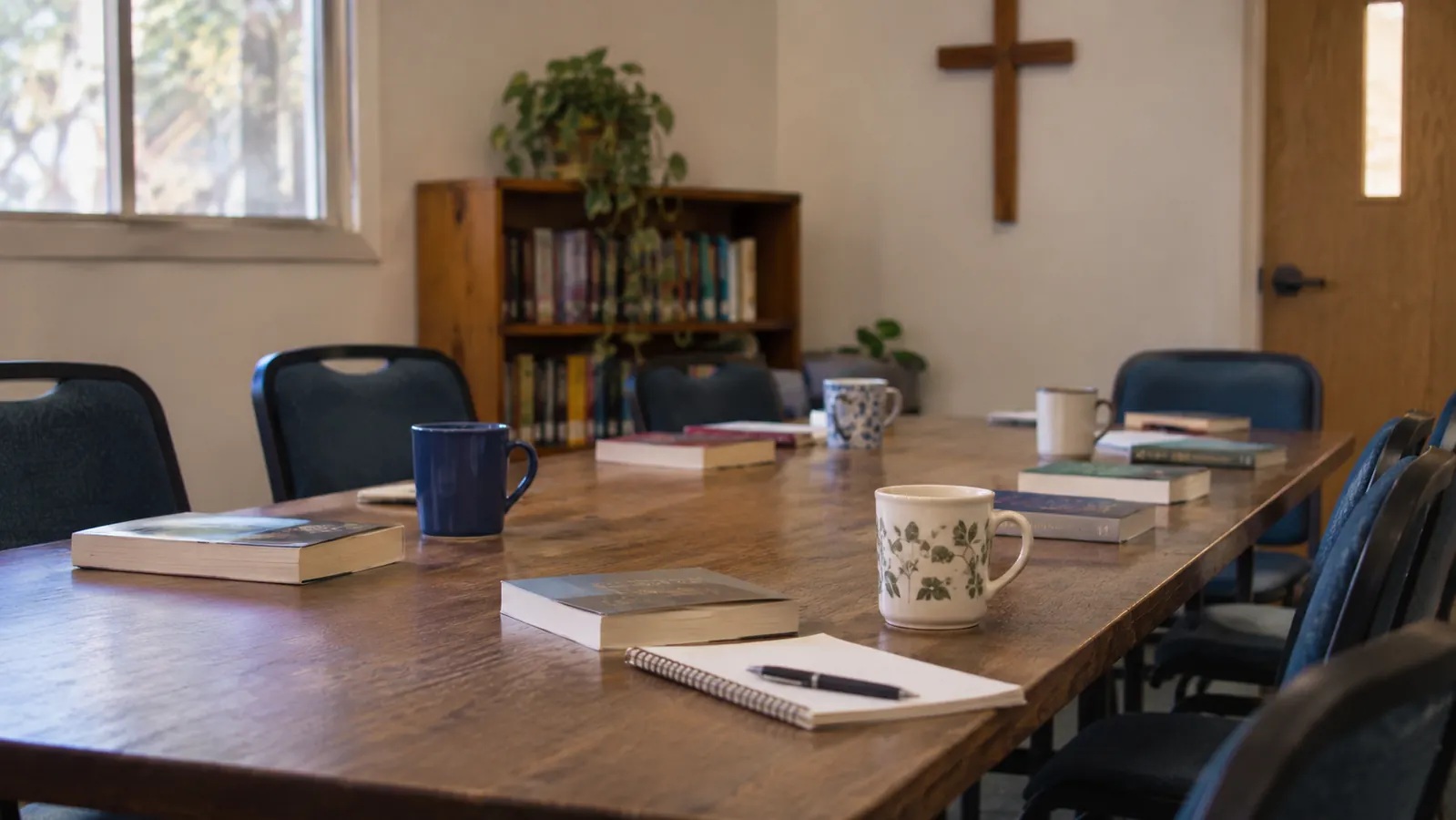
Our group meets on the second Tuesday of the month in the church fellowship room. There are eight of us. Dottie picked this book for January 2024. The meeting ran long, though not as long as the one we had for a different book a few months later. The conversation kept coming back to Bree. Some of us wanted to protect her. Some of us wanted to shake her. That is a good sign. A lead who only makes you feel one thing is a lead who has not been written fully.
The woman who sat the month out did not come back to the book, and I did not ask her to. One other member said the middle felt slower than the start. I understood that. Coble is not in a hurry. She wants you to live in the town for a while. If you are a reader who needs a chase on every page, you will feel that slowness. If you are a reader who likes a book to breathe, you will not mind it. I did not mind it. I read it twice, and the second time I minded it less.
What I Liked
- Bree Nicholls is a fully drawn lead, not a generic detective with a sad backstory.
- Samson is a working search dog, not a cute ornament.
- The Upper Peninsula setting feels like a real town you could drive through.
- The faith element is quiet enough to read without feeling preached at.
- It is book one of seven, so there is somewhere to go if you like the town.
Where It Falls Short
- The grief in the early chapters is heavy, and one reader in our group sat the month out.
- The middle is slower than the opening, and the book is not a chase.
- It is a series opener, so not every thread is tied off by the last page.
- Readers who want a thriller with constant action will be impatient.
- The Christian fiction shelf may set expectations the book does not meet in a loud way.
Who This Is For
This is for the reader who wants a mystery with a dog, a small town and a lead worth following. It is for the reader who does not need a body on every page and does not mind a story that takes grief seriously. It is for the reader who likes a series to settle into, and who would rather read book one in order than start in the middle. It is for the reader who wants a Christian novel that behaves like a novel first.
It is also for the reader who has a friend like Dottie, the one who guesses early and is usually right. Hand it over and see what she says. If she talks about the dog, you will know it landed.
Who Should Skip It
Skip it if you are in a season where a grieving mother is too close to the bone. Skip it if you want a fast thriller with a chase on every page. Skip it if you need every thread tied off in one book and you have no intention of reading book two. Skip it if you want the faith element to be loud, because Coble keeps it quiet.
And skip it if you are looking for a cozy with recipes and no real weight. This is a small-town mystery, but it is not a soft one. The town is warm. The story has a hard center. That is the trade you make.
If you want the town, start with book one
Without a Trace is the first of seven Rock Harbor novels. The paperback is 303 pages from Thomas Nelson. Read it in order, and give yourself a week.
Amazon Check today's price on Amazon →