

People ask me where to start a series the way they ask which door to use at a large church: a little embarrassed, sure everyone else already knows. There is a right answer here, it is the first book, and it is not a hard rule to keep once you understand why. I have watched women in my own book group begin at book three because that is what the shelf offered that Tuesday, then spend a month sorting out who was married to whom.
So, plainly. If I Run is book one of three, a Zondervan paperback, 320 pages, 5.5 by 8.37 inches and just under eight tenths of an inch thick, light enough at 9.6 ounces to carry in a tote. It is the first Terri Blackstock novel I ever finished, and the only book in my notebook with a Thursday start and a Friday finish. Start here, read the three in the order they were published, and you will not have to double back. What follows is what I would tell you across the kitchen counter, in five steps.
Book One Is the Right Door. Walk Through It First.
320 pages, Zondervan paperback, book 1 of 3. Read the first one and see how fast the evening goes before you commit to the other two.
Amazon Check Today's Price on Amazon →Step 1: Buy the First Book and Know the Other Two Exist
Book one does not tie everything off. Blackstock wrote it as the opening of a three book story and it reads like an opening, and I do not count that as a fault so much as a fact worth knowing before you begin. If you close it on a Friday night with nothing in the house to pick up next, you will feel the lack. I did not, because I had already ordered ahead. The other two are If I'm Found and If I Live, in that order.
If you are buying for a church library or for a group, buy all three together and keep them together. Half a set on a shelf is worse than none, because the person who finds it will not know there is more and will assume the story simply stops. I spent thirty one years watching that happen to good books, and it never stopped bothering me. What I did myself in March of 2023 was simpler than any of that. I finished book one late on a Friday, and the next morning I sat at the kitchen table with the paperback open beside me, looked up the other two, and had both on the way before I cleared the breakfast dishes. I have never once let a basket sit for a week and felt good about it afterward.
One more thing on this step. The listing says the book became a Lifetime movie. I have not seen it and I am not going to pretend otherwise. Read the book first in any case. That is not a snob's rule, it is a practical one. Once you have seen faces, you cannot get them back out of your head while you read.

Step 2: Read Them in the Order They Were Published
The order is If I Run, then If I'm Found, then If I Live. I read all three in the spring of 2023, one after another, and I have never regretted not spacing them out. What I would not do is start in the middle because the middle book happened to be on the sale table, or because a friend pressed book two into your hands and you want to be polite. Wait for book one. It is not a long wait.
This is the part where a librarian shows her age. In thirty one years of putting books into children's hands I never once handed out a second volume first, and I am not starting now. Series are built in a direction. If I Run carries its own weight as a story, but the later books assume you were there for it, and a reader who skipped ahead spends the whole time catching up instead of enjoying herself.
If the listing in front of you says Book 1 of 3, you have the right one in your hand. Blackstock has written a good many other novels and other series, and some of them are fine, but they are not this. Do not let a search result talk you into a different book with a similar cover. I say that as a woman who once bought the wrong title for a school library because two authors shared a first name and both covers were blue. It took a month and a returned order to sort out. Type the title and the author together, and read that line about which book of how many before you click.
Step 3: Clear Two Nights, Not Two Weeks
My ordinary pace is a novel every ten days or so, mostly in the evening after supper and on Sunday afternoons. I started If I Run before bed on a Thursday and finished it the next night. That has happened to me once. So plan accordingly. If you begin it on a Tuesday when you have somewhere to be at eight the next morning, you will either be late or you will read with one eye on the clock, and neither is the way to meet this book.
Do not mistake fast for thin, either. I have read quick books that left nothing behind them. This one moves because the young woman at the center of it, Casey Cox, is in motion the whole way through, and the reader goes with her. There is a cost to that and I will say it plainly: the pace leaves less room for the quiet stretches I love best in a novel, the long conversations and the slow afternoons. That is my honest complaint, and it is a small one.
What I would do is pick a night when staying up is allowed. A Friday, or a Saturday if you are like me and Sunday morning comes early. Fix a pot of tea, sit where the lamp is good, and give it the evening. It will take the evening. I made the other mistake once, years ago, starting a fast book on a Sunday night ahead of a school week. I read until one in the morning and I was a poor librarian all day Monday, short with the children and no good to anybody. Now I look at the calendar before I open anything with a reputation for speed.
Step 4: Read It Once Yourself Before You Hand It to a Group
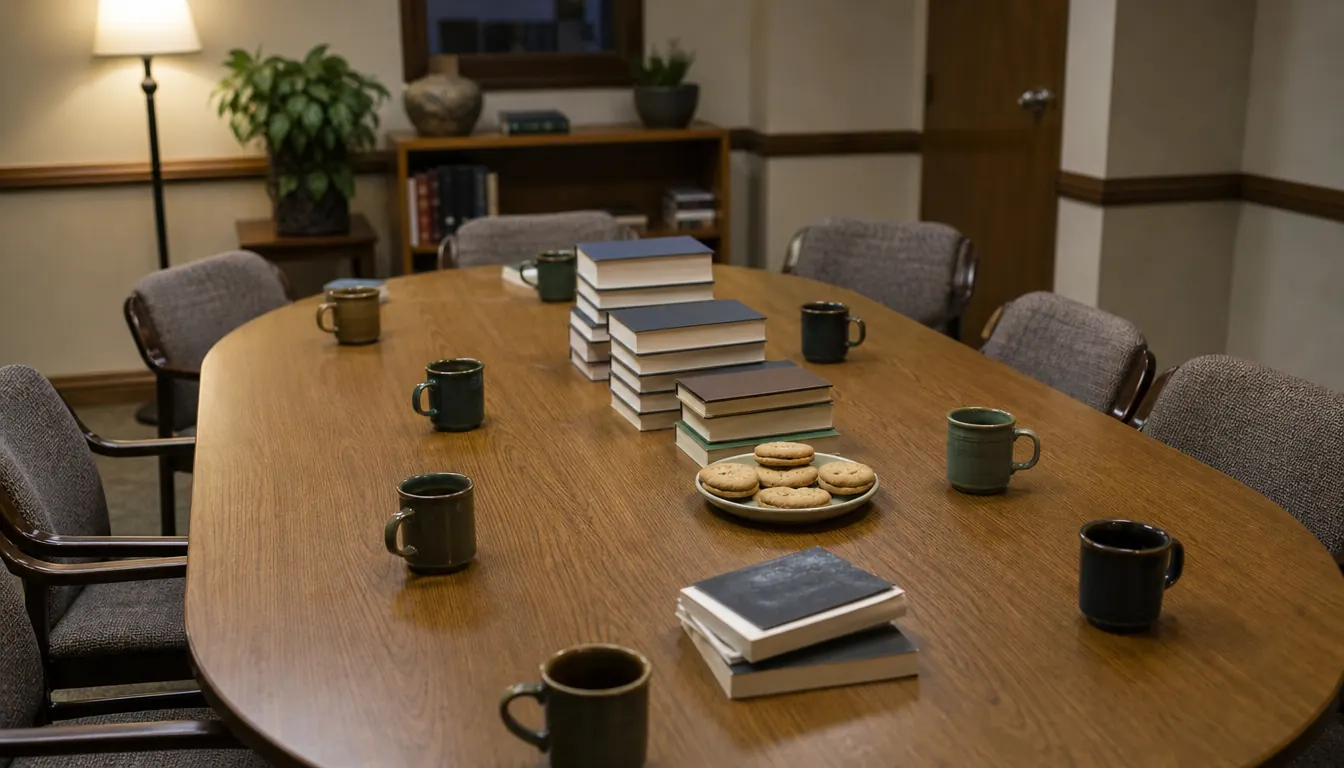
I picked If I Run for our women's group in May of 2023, and it was one of the easiest discussions we have had in years, because everybody had finished it. That is rarer than it sounds. When a book runs fast, the whole group arrives having actually read to the end, and the meeting is about the book instead of about how far each of us got before the week ran out.
Read it yourself first, before you hand it to anyone. Two reasons. The first is that you should know what you are passing along. The second is that Dottie, who is seventy four and my longest reading friend, will guess the culprit in the first thirty pages and say so out loud, and you will want to have your face arranged when she does. I say nothing. I never say anything.
And keep the ending to yourself. That is the one rule I hold to in the group, and it is the one rule I hold to here. If you want to know how it comes out, you will have to read it.
Step 5: Decide Who You're Handing It To Before You Finish It
By the time you are two chapters in, you will know whose hands this belongs in. Here is how I sort it. Hand it to the reader who wants speed and does not mind a young woman on the run for the whole of the book. Hand it to the reader who wants clean suspense, nothing she would have to skip, and a faith that sits inside the story rather than on top of it.
Do not hand it to the reader who wants everything settled in one volume, because it will not be. Do not hand it to the friend who reads for beautiful sentences and long interior quiet, because that is a different book. And do not hand it to anyone who has told you she is tired of chase stories this year. None of that is a knock on Blackstock. It is a book with a shape, and the shape suits some readers and not others.
I keep one page in my notebook for each book I finish: the date I started, the date I finished, and who I would hand it to. The line for this one names two women and then stops. That is not a slight. Two right readers are worth more than ten wrong ones, and I have learned that the hard way over a long career of recommending.
What Else Helps
A pencil and a small notebook at your side. Not for study, just for the small things: a name you want to hold onto, a chapter you want to come back to. I have done this for decades and it has never once spoiled a book for me. If you are reading with a group, the notebook is the difference between a good meeting and a meeting where everyone says she liked it and then reaches for a cookie. I write the date I opened it on the first line, the date I closed it on the second, and three or four words under that. Three or four is enough. Any more and you are writing a report, and a report is a chore, and a chore is how a reading habit dies.
Read it in a chair with decent light and no television going. I know how that sounds. But a fast book read in a noisy room loses half of what it does. Mine was the green armchair by the front window, the floor lamp on, Glenn in the other chair with something on the History channel and the sound turned down. That is the correct arrangement, and I will not be argued out of it.
And if you find yourself wanting something slower afterward, take a few weeks before you start the second one. I went straight on and I do not regret it, but there is no prize for finishing a series quickly, and a reader who gives each book a little air tends to remember them better.
My usual pace is a novel every ten days. If I Run took me two nights, and I have never once been sorry about the second one.
Start With Book One and See Where the Evening Goes
If I Run is the first of three, 320 pages, and it does not require you to have read anything else. Read it in order and the next two will make sense from the first page.
Amazon Check Today's Price on Amazon →